
20
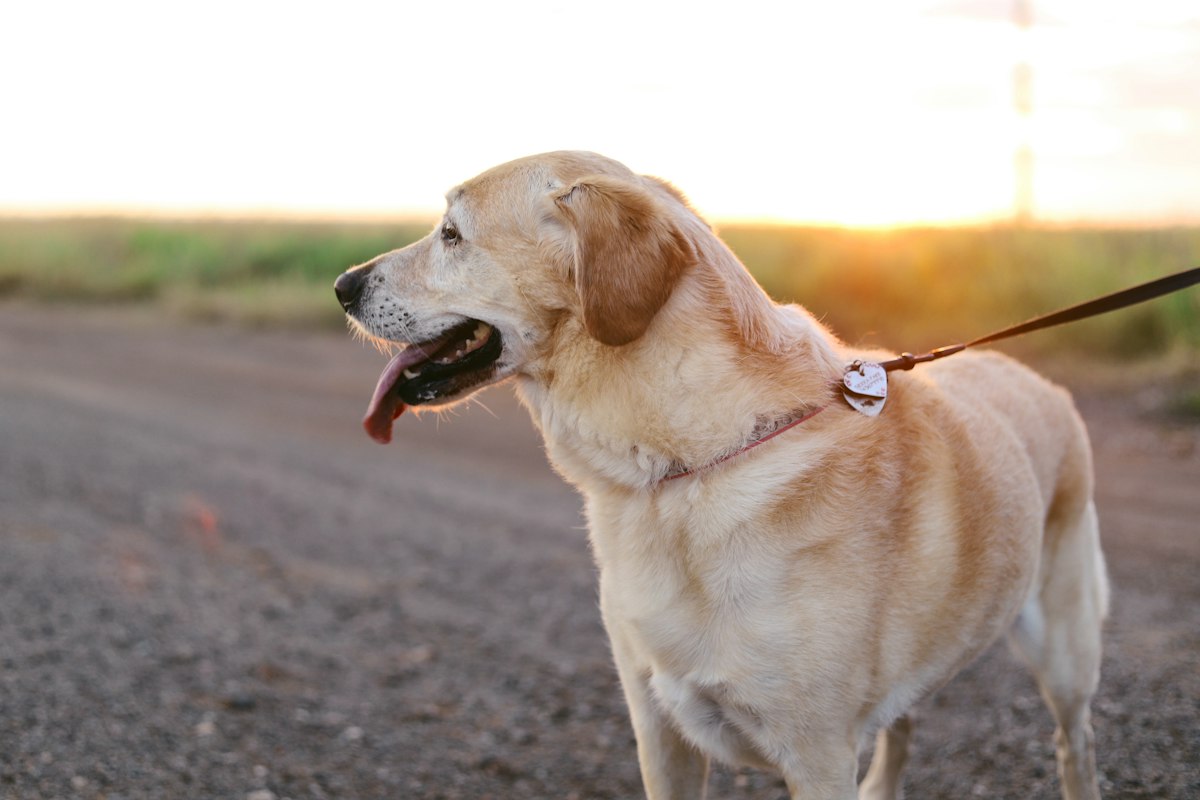
Personalised printing in Singapore has long meant the familiar list: name cards for the office, stickers for a product launch, a mug with a family photo for a birthday. Each one rests on a single thought. Take something ordinary and make it unmistakably yours. Lately that idea has reached a new member of the household, the dog.
From the office desk to the dog's neck
What changed is mostly the printing. Digital artwork can now be heat-pressed into polyester and similar materials by sublimation, so a design built from a photo can sit on fabric straps and cloth rather than only on paper or ceramic. That opened the door to everyday dog items carrying a pet's own face.
What can be personalised
A shop focused on personalised dog accessories singapore owners use, such as Little Red Cute, works with a short, clear range:
- Dog harness: sizes XS, S, M and L, made from polyester, neoprene and mesh with a strap you can adjust; the face and name sit on the chest panel.
- Dog collar: one size in PU leather measuring 47 × 1.9 cm, fastened by a buckle with several holes, and printed with the face and name as part of its pattern.
- Dog leash: polyester, 150 × 2.5 cm, printed end to end.
- Dog bandana: 100% polyester with a buckle fastening, in S, M and L.
The range also covers an acrylic photo night light, plus shirts and hoodies where the pet's face is stitched in thread at chest height.
How the process works
Anyone who has ordered printing knows the rhythm of artwork, proof and approval. This follows the same pattern. You upload one photo of your pet and choose a style. Your pet is illustrated from the photo, the name is added, and the finished design is shown on screen. Production waits for your sign-off, which comes before any payment. Each piece is then made to order in Singapore.
A good photo makes a good print
The usual printing rule applies: quality in, quality out. Send a crisp picture taken in good light, face showing, head turned about towards you. A snapshot from a phone will do.
Why off-the-shelf falls short
A metal tag or a standard patterned collar can carry a name at most. It cannot show what your dog actually looks like. Personalised printing can, and for owners who already put photos on mugs and calendars, putting their dog's own face on the things it wears every day is a natural next step.
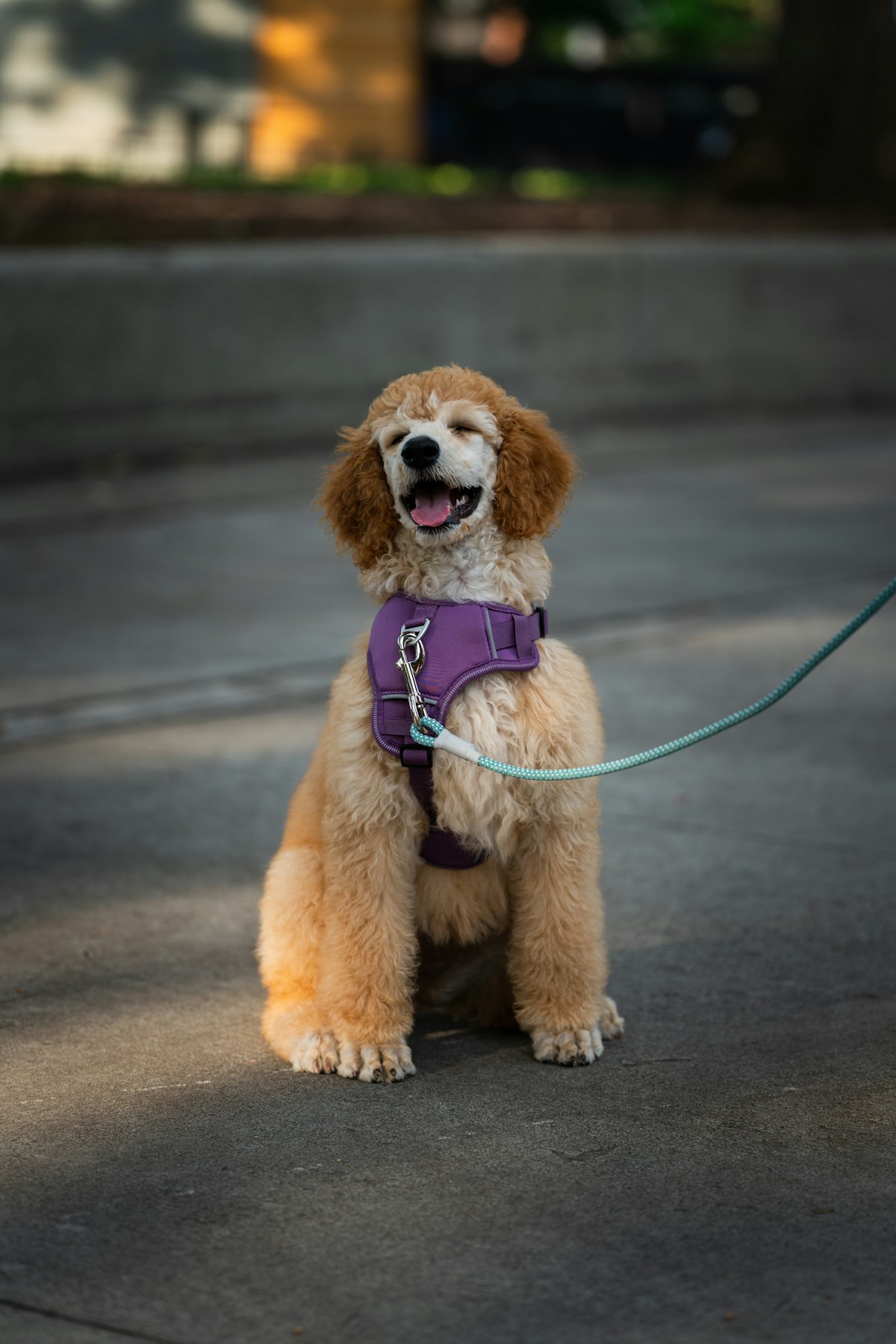
Print layouts usually fit a sensible shape: an A4 flyer, a square sticker, a business card. Hand a printer a strap 150 cm long and only 2.5 cm wide and the job changes completely. Every element of the design has to work in a strip, and it has to keep looking right as the strap loops, twists and hangs from a hand.
The layout problem
On a narrow strap, a single large image would simply be lost. Most of it would be hidden in your palm or folded against itself. The answer printers use is repetition. A design is built as a short section that repeats from the hook end right through to the handle, so wherever your eye lands, the same face and name come into view.
That section has to be readable at a small height. Bold shapes beat fine detail, a name needs enough contrast against its background, and the spacing between repeats should feel even rather than crowded.
How the print gets into the strap
A polyester strap is a good candidate for sublimation. The design is printed onto transfer paper, then heat-pressed into the material, where the dye moves into the fibres instead of sitting on top. Because the image is printed digitally before pressing, a photo-based design is possible, not just plain colours or stripes.
A leash built around your own dog
Such thinking shapes the custom dog leash singapore owners can order with their own pet on it. You start by uploading one photo and choosing a style. Your pet is then illustrated from the upload, and that image, together with the dog's name, is laid out to run along the strap.
The full design is shown on screen for you to check first. Nothing is made until you approve it, then the leash is made to order in Singapore. As for specs: it measures 150 cm long and 2.5 cm wide in one size, pairs the polyester strap with a hook in zinc alloy, and finishes in a large loop handle.
Getting the photo right
- Pick a clear, well-lit photo with the face fully visible.
- Ideally the eyes point somewhere near the lens.
- A phone photo is fine; there is no need for studio gear.
- Avoid shots where a hand, toy or shadow crosses the face.
Why it is worth the extra thought
A plain nylon lead from a pet store does its job and nothing more. Nobody looks twice at it. A strap printed with your own dog's illustrated face and name, like the ones Little Red Cute makes, turns the most ordinary walking item into something that is plainly yours, and it is a good reminder that even the narrowest print area can carry a personal design.
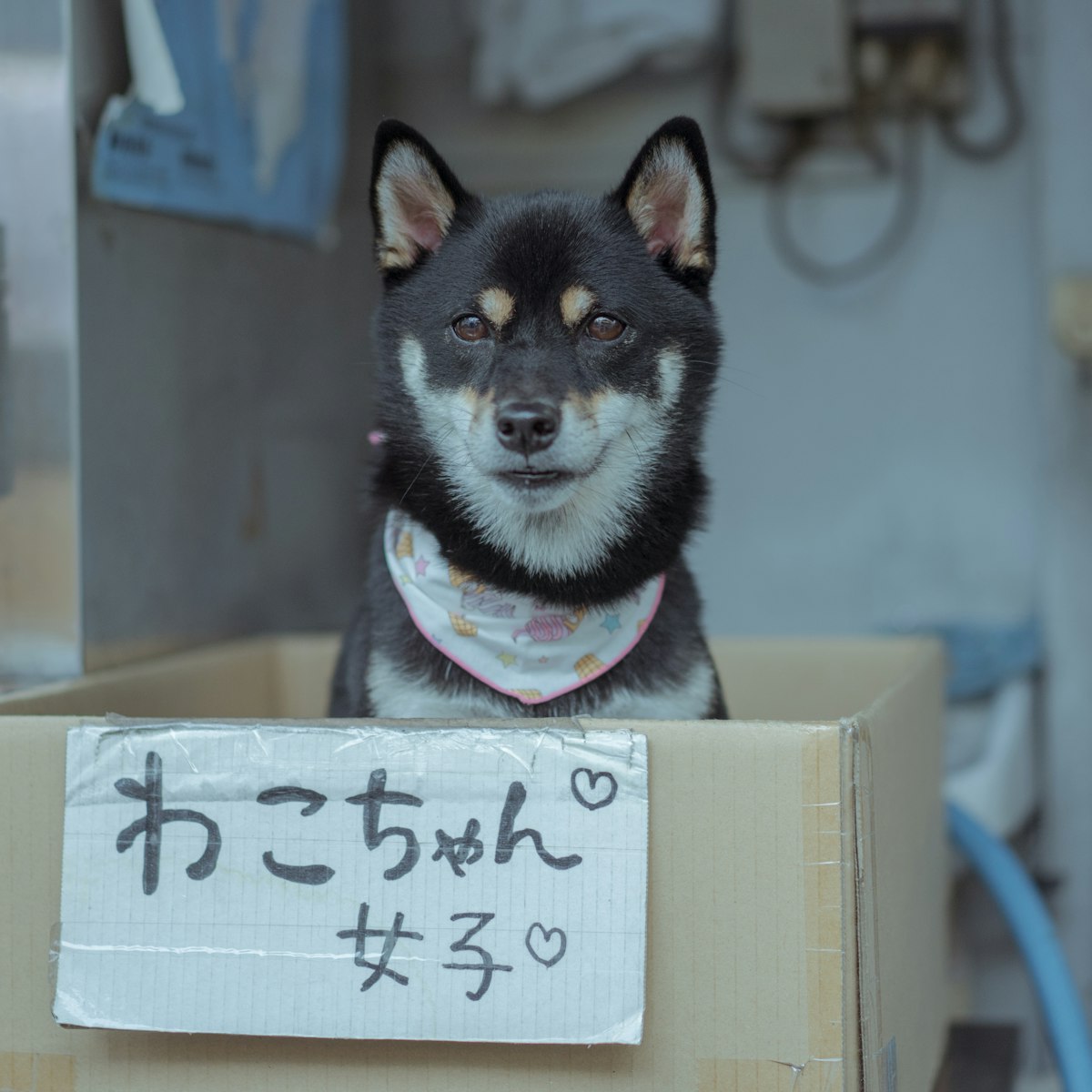
Ask a printer which method suits polyester fabric and most will say the same word: sublimation. It is the process behind sports jerseys, flags and soft signage, and it is a neat fit for something much smaller too, the triangle of cloth a dog wears around its neck. Here is how the method works, using a personalised bandana as the example.
Ink that turns into gas
Most printing lays ink on top of a surface. Sublimation behaves differently. The design is first printed onto transfer paper with special dye inks. That paper is then placed against the fabric and pressed under heat. At the right temperature the dye skips the liquid stage and becomes a gas, which moves into the polyester fibres themselves. When the press lifts, the colour sits inside the material rather than as a layer resting on it.
Two things follow from this. The fabric keeps its normal hand feel, because there is no film of ink on the surface. And the method needs polyester, since cotton fibres do not take up the dye the same way.
Why a bandana is a good canvas
- The material is right. A bandana in 100% polyester takes the dye across its whole face.
- The shape is simple. A flat triangle gives a clean print area with no seams to work around.
- The design can be detailed. Faces, names and small repeating icons all come through, since the image is printed digitally first.
Putting your own dog on it
This is where a print job turns personal. For a dog bandana singapore owners can design around their own pet, the process starts with a single photo. After the upload you select a look, then your pet is illustrated from the photo in that look. The dog's name goes into the design as well.
The finished design appears on screen before anything is made, and production starts only once you approve it. Anyone who has signed off a print proof will recognise that step. Each bandana is then made to order in Singapore and heat-pressed by sublimation.
Sizing and care
The bandana uses a buckle fastening and comes in three sizes: small fits a neck measuring roughly 35–44 cm, medium roughly 39–51 cm, and large roughly 42–56 cm. Measure loosely around your dog's neck before choosing. It is made to be washed, which suits a piece of fabric that goes on walks.
A quick photo checklist
The print can only be as good as the picture you start from. Go for a crisp daytime frame where nothing hides the muzzle or eyes, with the head turned your way. Your phone camera is enough. Daylight helps, and so does a background that does not blend into the fur.
A generic patterned bandana from a shop shelf will cover a neck, but it says nothing about the dog wearing it. A sublimated one built around your own pet's face and name, as Little Red Cute makes, is a small print project with a very particular audience of one.